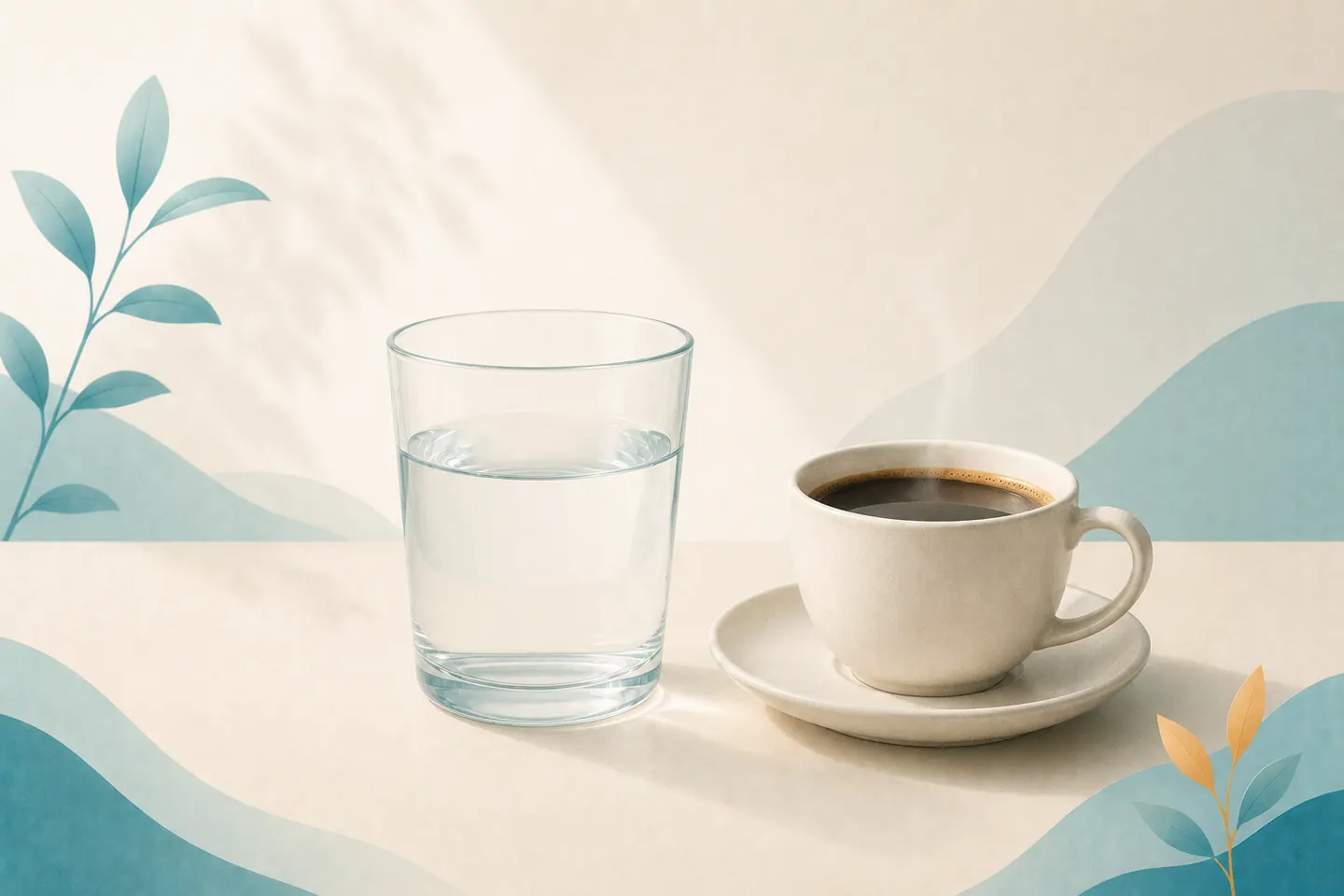
Around every case of paruresis grows a quiet set of daily habits — drink less before going out, maybe have a drink to take the edge off, skip the coffee, time the fluids carefully. Some of these habits feel like smart management. Most are myths that quietly keep the condition in place. Let’s separate what actually helps from what only seems to.
Myth: “If I drink less, I’ll be safe”
This is the most common coping strategy of all — and one of the most counterproductive. Restricting fluids to avoid needing a toilet feels like control, but it carries real costs.
Physically, chronic under-drinking leads to dehydration, headaches, fatigue, and — ironically — can irritate the bladder and worsen urinary problems over time. Highly concentrated urine is harder on the system, not easier.
Psychologically, the damage is subtler and deeper. Every time you dehydrate yourself to dodge a situation, you are avoiding — and avoidance is the engine that keeps paruresis alive. You are teaching your brain, again and again, that public bathrooms are too dangerous to face with a normal bladder. The fear is managed for a day and reinforced for a lifetime.
Freedom from paruresis looks like drinking normally and not thinking about it — not like rationing water to stay out of harm’s way.
Myth: “A drink or two will loosen me up”
Because alcohol lowers anxiety, some people discover they can urinate more easily after a drink, and it becomes a reliable crutch. It is easy to see the appeal — and easy to miss the trap.
Leaning on alcohol to urinate has several problems. It is unreliable — the effect varies and can vanish when you most need it. It can worsen anxiety overall, especially as it wears off. It increases urine production, sometimes turning one problem into another. And most importantly, like medication used as a prop, it never changes the underlying pattern — so the moment you are sober, paruresis is exactly where it was, now with a dependence layered on top. Using alcohol as your key to public bathrooms is a genuinely risky road.
Fact: caffeine usually doesn’t help
Caffeine is worth a closer look because it works against shy bladder on two fronts at once. It is a stimulant, which can heighten the very anxiety and edginess that triggers the muscle to clench. And it is a diuretic, increasing urine production and urgency. For someone with paruresis, that combination — more anxious and more desperate to go — is close to the opposite of what you want.
Many people find that moderating caffeine, particularly before situations they know will be challenging, takes a little pressure off and makes calm practice easier. This isn’t about strict prohibition — it’s about not stacking the deck against yourself.
What actually helps with everyday habits
If restriction and crutches are the wrong path, what’s the right one?
- Hydrate normally. Drinking a healthy, ordinary amount of water is part of treating your body as safe and capable — the opposite message to avoidance.
- Be mindful of caffeine around hard situations, without obsessing over it.
- Don’t rely on substances to urinate. If you can only go with alcohol or a pill, the pattern is untouched. Real progress means being able to go without a chemical key.
- Let normal drinking be part of your exposure. Practising while properly hydrated — rather than carefully dehydrated — is part of teaching your nervous system that you can handle these situations as a normal person, not a carefully managed one.
The deepest point here is simple. The goal of recovery isn’t to get better at managing a shrunken, carefully rationed life around your shy bladder. It is to no longer need the management at all — to drink your coffee, enjoy your water, and use the bathroom like the act it was always meant to be.